How Behavioral Analytics Tools Are Being Integrated to Promote Responsible Play in App-Based Wagering Environments
Frankie Braun · Aug 25, 2026
How Behavioral Analytics Tools Are Being Integrated to Promote Responsible Play in App-Based Wagering Environments
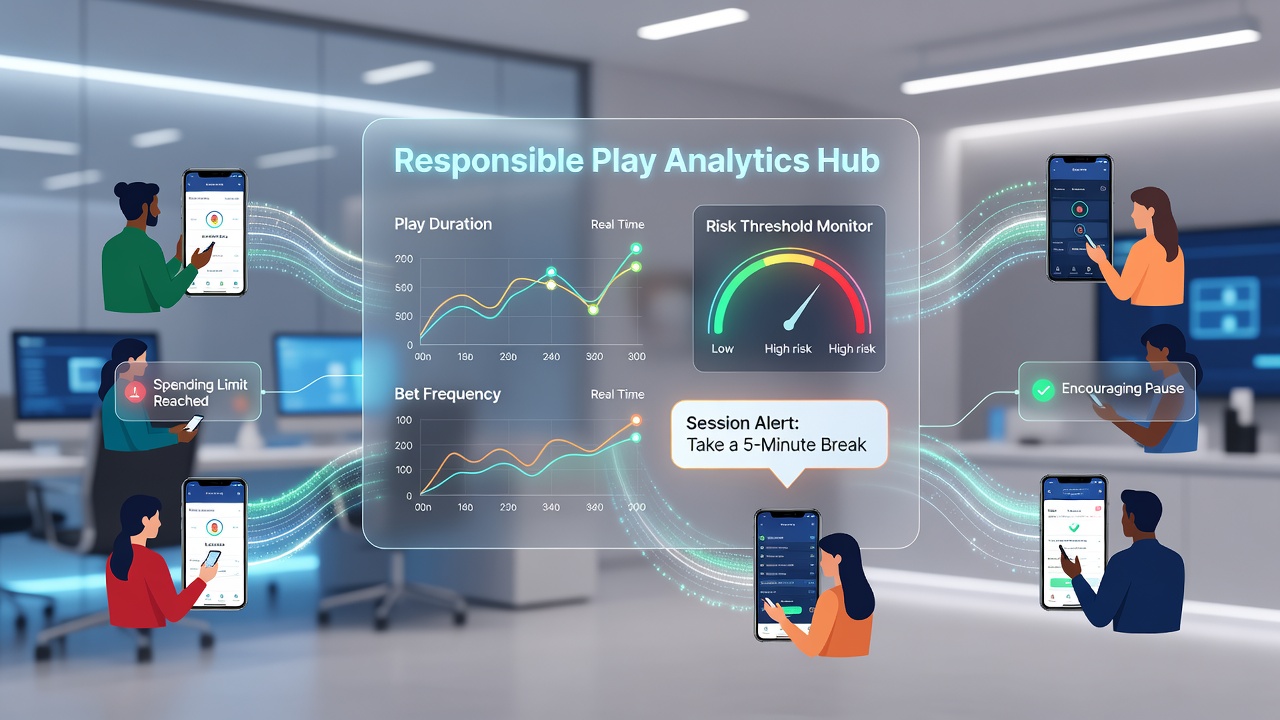
App-based wagering platforms have expanded rapidly since the early 2020s, and operators now deploy behavioral analytics tools that monitor user patterns in real time to support responsible play initiatives across multiple jurisdictions. These systems collect data on session duration, bet frequency, deposit amounts, and response times to identify indicators of potential harm before they escalate, while operators integrate alerts and limit-setting features directly into the app interface.
Data Collection and Pattern Recognition
Behavioral analytics platforms track sequences of user actions such as rapid successive bets after losses or sudden increases in stake sizes, and algorithms compare these sequences against historical datasets compiled from millions of accounts to flag deviations that warrant intervention. Researchers at institutions including the University of Nevada have documented how machine learning models trained on anonymized transaction logs achieve detection rates above 80 percent for high-risk patterns when tested against controlled samples. In August 2026 operators in several U.S. states reported deploying updated versions of these models that incorporate time-of-day and device-usage variables, allowing more precise segmentation of user cohorts.
Real-Time Interventions and User Controls
Once a system identifies elevated risk indicators it can trigger tiered responses that range from gentle reminders about session length to temporary deposit locks or mandatory cooling-off periods. App developers embed these prompts within the existing betting flow so users encounter them without leaving the main interface, and the same platforms offer self-exclusion tools that sync across multiple operators through shared databases maintained by state regulators. Data from the Australian Communications and Media Authority shows that accounts receiving automated interventions in the first half of 2026 exhibited a 34 percent reduction in subsequent high-velocity betting sessions compared with control groups that received no prompts.
Regulatory Frameworks and Cross-Border Standards
Government agencies in North America, Europe, and Australia have introduced guidelines that require licensed operators to maintain documented behavioral monitoring programs and to report aggregate risk metrics on a quarterly basis. The Canadian Centre for Addiction and Mental Health published findings in 2025 indicating that provinces with mandatory analytics integration recorded a measurable decline in calls to helplines relative to provinces without such requirements, and similar metrics are now tracked by the New Jersey Division of Gaming Enforcement. These frameworks emphasize data privacy through encryption and anonymization protocols that prevent individual user identities from being exposed during analysis or reporting.

Case Examples from Major Operators
One large European operator integrated a behavioral scoring engine that assigns each session a risk index updated every five minutes, and the engine automatically surfaces personalized spending summaries when the index crosses predefined thresholds. In parallel, a North American sports-betting platform partnered with a third-party analytics firm to test predictive models that forecast the likelihood of a user requesting a deposit-limit increase, then routes those users to an educational module before processing the request. Observers note that both implementations rely on continuous model retraining using fresh data streams, which helps maintain accuracy as user behavior evolves across different game types.
Challenges in Implementation and Measurement
Technical teams must balance the sensitivity of detection algorithms against the risk of false positives that could frustrate low-risk users, and operators therefore conduct A/B testing cycles that compare intervention outcomes across matched user segments. Academic reviews published by the National Opinion Research Center at the University of Chicago highlight that effectiveness metrics improve when operators combine behavioral signals with optional user surveys that capture self-reported motivations. Data privacy regulations in multiple regions further require explicit consent mechanisms and regular audits of how analytics outputs influence account actions.
Emerging Developments in August 2026
Recent updates released in August 2026 introduced hybrid models that merge on-device processing with cloud-based analytics, reducing latency for real-time alerts while preserving compliance with data-localization rules in several markets. Industry associations such as the World Lottery Association have begun publishing voluntary benchmarks that compare intervention response times and user-retention statistics across participating operators, creating a shared reference point for continuous improvement.
Conclusion
Behavioral analytics tools continue to evolve as app-based wagering environments scale, and their integration into responsible-play frameworks rests on measurable pattern detection, timely interventions, and adherence to evolving regulatory expectations across jurisdictions. Operators that maintain transparent reporting and iterative model refinement contribute to datasets that researchers and regulators use to refine future standards, while users gain access to layered controls that operate within the same applications they already employ for wagering.